Former Supreme Court justice Marie Deschamps has said, ‘We have a huge problem, and this is what we need to do. Where’s the government on all of that?’ asks retired colonel Michel Drapeau.
PUBLISHED May 5, 2015, THE HILL TIMES
Nothing will be done in response to the report on sexual harassment in the Armed Forces, says a former military colonel.
“This is scary. It really really is,” said lawyer and retired Colonel Michel Drapeau. “Nothing gets done. Maybe there is political slack to be had if they get involved, but I mean, the chief of defence had the audacity to show up after having had all that time to think about it, and to put the fixes in. The report is troubling, the report is disturbing to mothers and fathers and also people thinking of joining the forces. You would’ve thought this required horse medicine and now what we have is well, ‘We’ll take a look at it.’ Give me a bloody break. I’m not impressed.”
Mr. Drapeau told The Hill Times the federal government has shown a lack of leadership on the issue following former Supreme Court justice Marie Deschamps’ scathing review of the sexual harassment and misconduct culture in the Armed Forces. The Armed Forces is operating as if it’s its own entity, he said.
“Mme Deschamps has said we have a huge problem, and this is what we need to do. Where’s the government on all of that? DND is not a self-regulated organization. They’re there as part of the bureaucracy and they in fact should do as they’re told and now is the time,” Mr. Drapeau said, criticizing Defence Minister Jason Kenney (Calgary Southeast, Alta.) for being “missing in action” and not speaking out.
In response to a question from NDP MP Sadia Groguhé (Saint Lambert, Que.) in Question Period on May 1 on whether Mr. Kenney will instruct outgoing Chief of Defence Staff Tom Lawson to implement all the recommendations in the report, Conservative MP James Bezan (Selkirk-Interlake, Man.), Parliamentary secretary to the Defence minister, said that Mr. Lawson “has been very clear” and that “they are looking at how they can best implement all of the recommendations and ensure that complaints are handled and received properly in a modern system. The chief of the defence staff also said yesterday that within the Canadian Forces, there needs to be a cultural shift.”
Mr. Bezan has been fielding questions on the issue and repeated a similar answer following a question from Liberal MP Joyce Murray (Vancouver Quadra, B.C.) today on why the minister has been silent on the issue.
Lauren Armstrong, a spokesperson for Mr. Kenney, told The Hill Times: “We support the decision of the Chief of the Defence Staff to accept the recommendations and examine the best way to implement them.”
Ms. Deschamps made 10 recommendations, of which the government said it supports the first two. The others will have to be taken under advisement, Mr. Lawson said.
In her report, Ms. Deschamps said that the Canadian Armed Forces fosters a hostile culture that is “disrespectful and demeaning to women. Further, she noted, “there was a broad perception among participants that the senior leadership of the CAF condones sexually inappropriate conduct.”
The year-long review found that addressing sexual harassment and misconduct “is not a priority for CAF leaders” and that “senior leaders are perceived as ‘burying the issues’ and as being ‘desensitized.’”
Mr. Lawson ordered the external review last year when Maclean’s reported that there were approximately 178 incidents of sexual misconduct within the military investigated every year. The House Defence Committee questioned him about it at the time, but he said he needed more information.
Ms. Deschamps was appointed to lead the review, with a mandate to look into “the extent to which Canadian Armed Forces members report alleged incidents of sexual misconduct or sexual harassment and if applicable, any reasons why reporting may not occur, including the role of military culture and the chain of command as it relates to the reporting of incidents.”
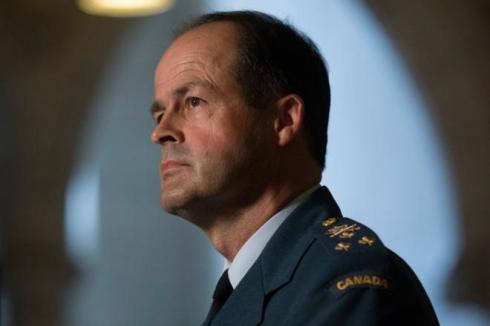
Mr. Lawson released the report at a press conference with Ms. Deschamps, Chief Warrant Officer Kevin West and Major-General Chris Whitecross on April 30.
In response to the report, Mr. Lawson said that the department has created a strategy “to deliver a decisive response, while allowing the organization to further understand and solve the more complex aspects of the problem and develop more comprehensive solutions.”
Mr. Lawson noted that “inappropriate sexual behaviour is utterly corrosive” before thanking Ms. Deschamps for her work.
“Exemplary conduct is part of Canadian Armed Forces members’ obligation to serve. We cannot accept anything less, and I will not accept anything less,” he said.
Ms. Whitecross added: “Inappropriate sexual behaviour is a complex problem, and quick band-aid fixes are unlikely to solve the many dimensions of the problem. We need well-considered innovative change to arrive at a long-term and sustainable solution. The CAF action plan is a key step of the solution.”
The action plan includes: engaging with leadership at all levels to support required changes; examining who is responsible for prevention, training, support, research and reporting inappropriate sexual behaviour; encouraging victims to report abuse; conducting a comprehensive review of all sexual assault and harassment policies; and updating education and training curriculum.
Ms. Deschamps noted that the “boy’s club” culture is still entrenched in the Armed Forces. There were 14.57 per cent female officers on Jan. 1, 2015, or 2,758 people. This is similar to the number of women on boards of directors of U.S. companies from 10 years ago, Ms. Deschamps said, recommending that a gender-based analysis on CAF policies and procedure will “help to ensure that policies do not implicitly lead to discriminatory practices.”
Equal Voice national spokesperson Nancy Peckford said she is “encouraged” the military has conducted this comprehensive review of its culture. There should be zero tolerance for sexual harassment and abuse, she told The Hill Times.
“We are optimistic that if Maj.-Gen Christine Whitecross is fully supported by other leaders in the Canadian military to usher in effective and widespread positive change, it can happen,” she said. “Ultimately, however, we need to change the percentage of women in the Canadian military. At less than 20 per cent, there is no way that women are able to constitute a critical mass of decision makers at every level of the organization. The current imbalance is not sustainable.”
Mr. Drapeau criticized Mr. Lawson, however, for not taking responsibility for the problem. “In many respects, this is a leadership issue,” he said. “It goes right to the very top.”
He explained that Canadians wanted to hear from Mr. Lawson but he came up empty.
“It could not have seen a worse performance by a chief of defence staff and nothing will be done. Nothing is being done. Nothing will be done,” he said.
Mr. Drapeau said he’s calling on incoming Chief of Defence Staff Jonathan Vance to take on the missing leadership role.
“General Jon Vance will have to exercise leadership to make things right by stepping up to the plate on his appointment as the CDS and assert his authority from the get go if for nothing else to gain the respect of the men and women in uniform, including the many victims of sexual assaults who have yet to report their assaults,” he told The Hill Times. “To do so he will have to convince his immediate superior, the Minister of National Defence, to change the National Defence Act to return section 70 to its original reading. I have confidence that General Vance can and will do just that. Nothing less will return the military to its aura of grandeur and respect in the minds of Canadians. Anything else will be seen as the desertion of the victims of sexual crimes.”
Mr. Drapeau explained that the Armed Forces did not have jurisdiction to investigate sexual assault and harassment cases until 1998 when changes to the National Defence Act were made following the Somalia Inquiry. It was a mistake to do this, he said, and if the government wanted to do something meaningful, it could table a bill to remove the clause immediately.
“It’s one line. The minister could table the bill tomorrow,” Mr. Drapeau told The Hill Times. “If you had a victim of sexual assault in Kingston, at the college, that person instead of calling her chain of command she’d call 911 and you get the Kingston Police or the OPP or the RCMP or whatever will come and investigate. They’re outside, arms-length from the chain of command and if they need to lay a charge they will lay a charge like they did for Russell Williams.”
One of the recommendations Ms. Deschamps made was to create an independent accountability centre for sexual assault and harassment that is outside of the Canadian Armed Forces. It would have “the responsibility for receiving reports of inappropriate sexual conduct, as well as prevention, coordination and monitoring of training, victim support, monitoring of accountability, and research, and to act as a central authority for the collection of data” in addition to allowing victims to report incidents of assault and harassment. The centre would also “allow victims of sexual assault to request, with the support of the center for accountability sexual assault and harassment, transfer of the complaint to civilian authorities; provide information explaining the reasons when transfer is not effected.”

